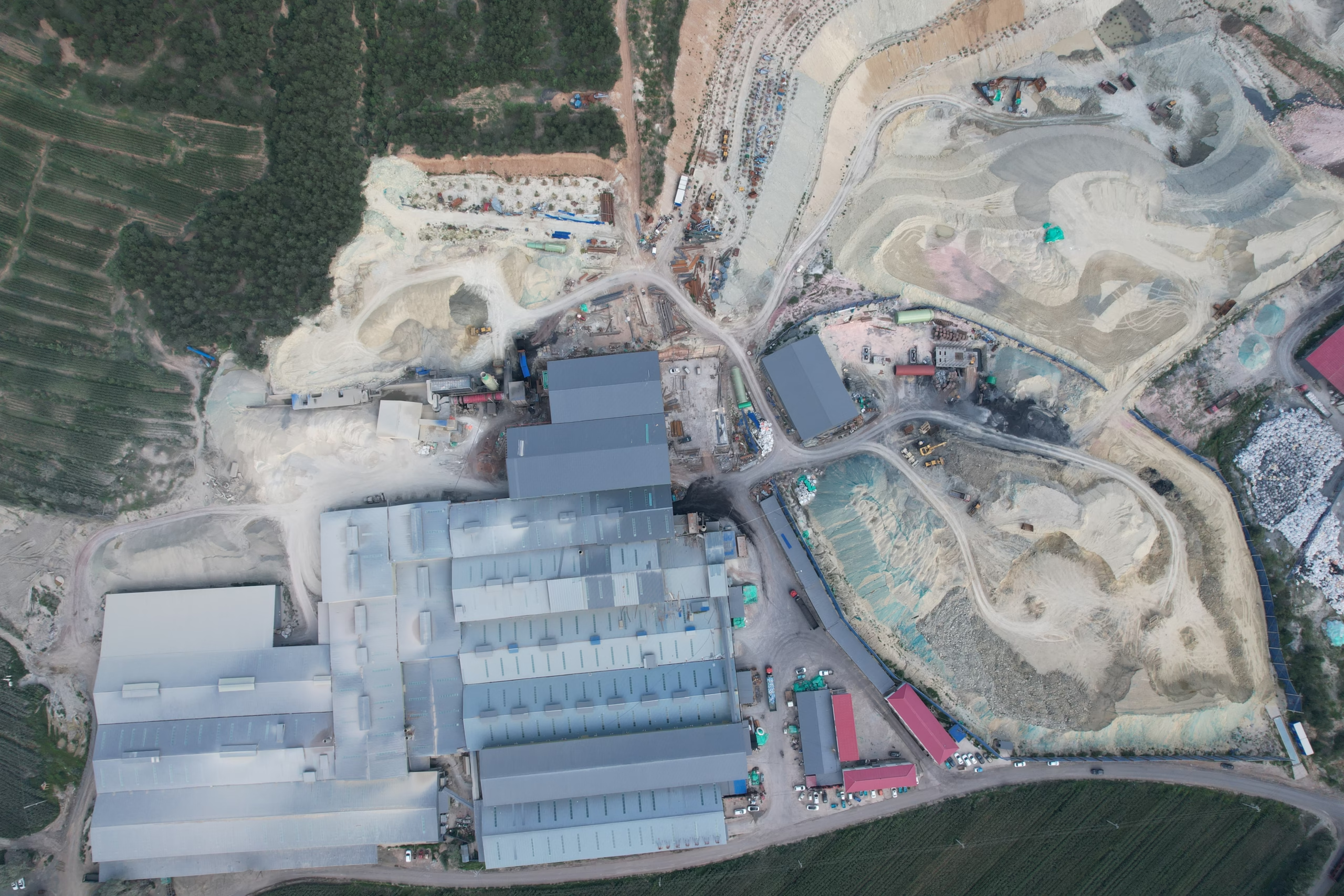
Supplier selection starts with market fit
Choosing a cat litter supplier is not only a price comparison. For importers, distributors, marketplace sellers, and private-label brands, the safer decision is to confirm whether the factory can repeat the same product quality across future orders.
A strong supplier should explain its bentonite source, production workflow, dust and moisture control, formula options, retail packaging, export documentation, and after-sales communication. The final choice should also reflect your market: scent preference, pack size, bag type, and local buyer language all affect sell-through.
Supplier qualification checklist
- Ask for factory and mineral-source proof before comparing quotations.
- Confirm clumping strength, dust level, moisture, granule size, scent, and odor-control additive options.
- Match packaging to the sales channel: retail PE bag, private-label bag, bulk sack, carton bundle, or container shipment.
- Request samples and keep the approved sample as the reference for repeat production.
- Check whether the supplier can support local-language labels, artwork, barcode area, carton plan, and loading schedule.
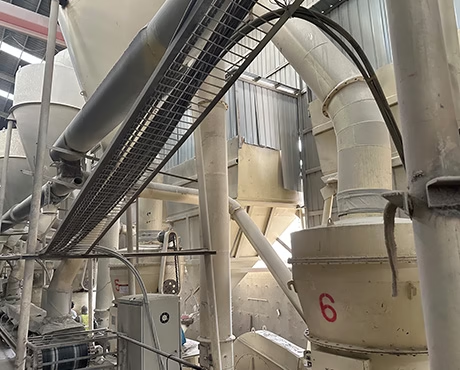
1. Verify the mineral source and factory control
For bentonite cat litter, raw material stability affects clumping, water absorption, dust, odor-control performance, and repeat-order consistency. A factory with controlled mineral resources is usually easier to audit than a trader that changes sources by price.
- Bentonite origin and supply stability
- Granule size and moisture range
- Screening, drying, dust-control, blending, and packing workflow
- Batch record and pre-shipment inspection process
2. Evaluate formulas by the local product range
The same base product may need different formula positioning by market. Southeast Asian buyers often compare scented 10L products, Korean buyers care more about unscented low-dust performance, and GCC buyers often need odor control with bilingual packaging.
- Scented, unscented, low-dust, activated carbon, zeolite, and deodorizing-particle options
- Clear claims without unsupported medical or percentage promises
- Sample confirmation before scaling a new OEM formula
3. Make packaging and export details visible early
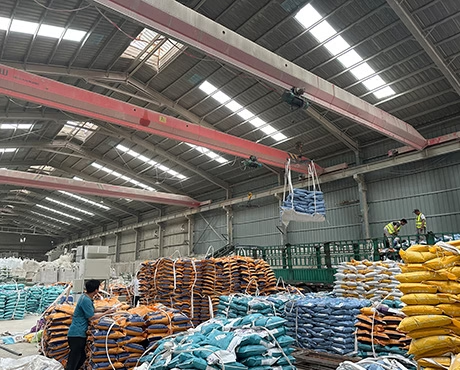
Packaging is part of the product. A reliable supplier should discuss bag size, handle, zipper, print method, barcode, carton, pallet, container loading, and lead time before the final quotation.
- 5L, 10L, 20L, 20kg, 25L, and market-specific sizes
- Private-label artwork and local-language label support
- MOQ, lead time, carton bundle, pallet, and destination port
4. Watch for red flags before ordering
A low price is useful only when the supplier can keep specifications stable. Be cautious if the supplier cannot explain the factory process, avoids sample comparison, gives vague packaging details, or changes specs during negotiation.
- No real factory or production images
- No specification sheet or batch-control explanation
- Unclear MOQ, export terms, or after-sales contact
- Overstated claims about flushability, antibacterial performance, or exact deodorizing percentage
Supplier evaluation matrix
| Factor | What to check | Why it matters |
|---|---|---|
| Factory proof | Workshop, production line, mineral source, sample process | Confirms the supplier can repeat quality, not only trade catalog SKUs |
| Formula fit | Scent, additive, granule size, dust, clump hardness | Helps the product match local buyer expectations |
| Packaging | Bag size, language, artwork, carton, pallet, container loading | Protects retail shelf performance and logistics |
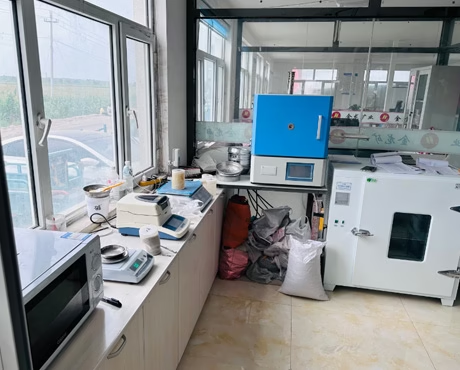
| QC | Moisture, dust, absorption, clumping, package sealing | Reduces complaint risk after distribution |
| Market content fit | Buyer terms, platform wording, product photos, image descriptions | Helps product pages and marketplace listings sound natural to local buyers |
How regional market data changes supplier selection
For each market, we reviewed platform listings, buyer wording, fragrance preferences, additive options, pack sizes, bag formats, and product-claim cautions before shaping the local version.
The English page explains the supplier-selection method, while each local page should read like it was written for that market's real buyers, channels, and packaging habits.
| Market notes | global_b2b_supplier_guide |
|---|---|
| Channels reviewed | Importer, distributor, private-label, and retail channels |
| Buyer search terms | cat litter supplier, cat litter manufacturer, bentonite cat litter supplier, wholesale cat litter, private label cat litter |
| Common scents | Scented and unscented options by buyer segment |
| Mix-ins | Activated carbon, zeolite, and deodorizing options after sample confirmation |
| Pack sizes | 5L, 10L, 20kg, 25L, and buyer-specific packs |
| Bag types | Retail bag, private-label bag, carton bundle, and bulk sack |
Recommended next pages
FAQ
What is the first thing to check when choosing a cat litter supplier?
Start with factory proof and bentonite source. These two items affect clumping, dust, moisture, odor control, and repeat-order consistency.
Should I choose a trader or a cat litter manufacturer?
A trader may help with mixed sourcing, but a manufacturer gives better control over formula, packaging, QC, batch records, and repeat production.
What should I send for a quotation?
Send target market, product type, granule size, scent, additive, package size, expected order quantity, destination port, and private-label artwork needs.
Can one supplier support both bulk and private label cat litter?
Yes, if the factory has both bulk packing and retail packaging capability. Confirm MOQ, bag options, artwork process, and loading plan before ordering.